A Tale of Two Pixels: Navigating Google’s Masterclass in Smartphone Tiers
21 May 2026I’ve put well over a dozen smartphones through their paces this year, and I’ll level with you: my daily drivers invariably boil down to a Pixel 9 Pro and an iPhone 16 Pro. Two completely different philosophies and two distinct user experiences, yet tied together by one absolute constant—my unwavering preference for that pocketable 6.3-inch form factor. It just fits the hand properly. So, when the tech bods at Google dropped the new Pixel 10 Pro, I was dead keen to see if they’d actually moved the needle or just phoned it in.
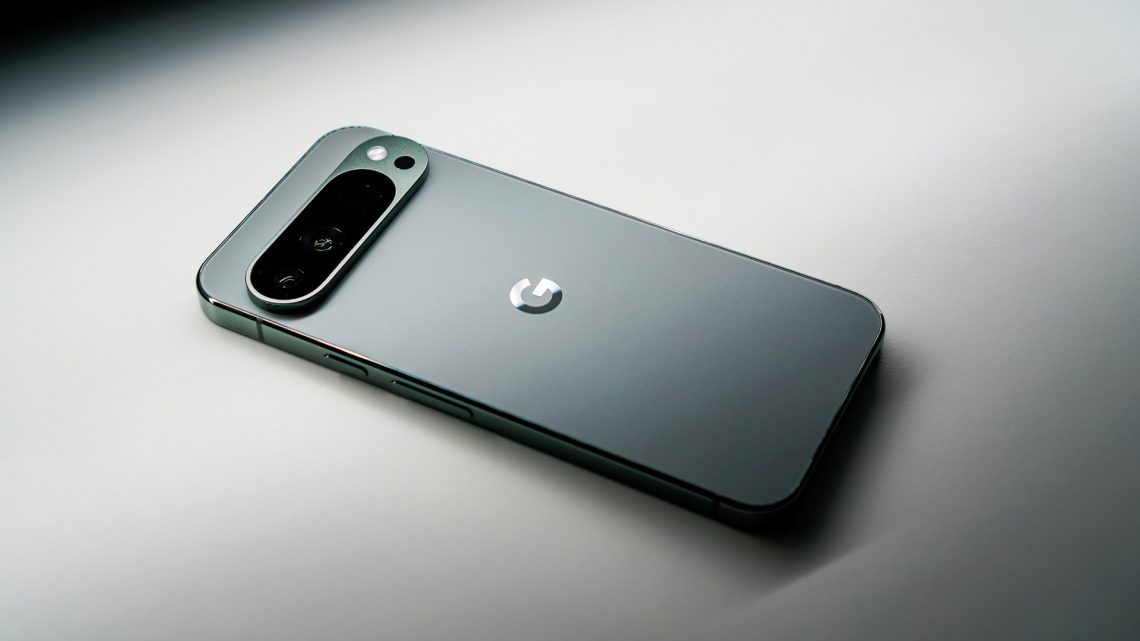
Let’s get one thing straight straightaway: if you’re hunting for a ground-up aesthetic revolution, you’re barking up the wrong tree. Google is sticking firmly to its guns with that signature camera visor splashed right across the back. I used to think it looked a bit daft, if I’m honest. Now? It’s as much a part of the tech landscape as Apple’s old notch. They aren’t messing with a winning recipe, which is an easy play, sure, but what properly won me over is the matte finish on the rear contrasting sharply with the polished rails. Chuck it in your hand, and the Pixel 10 Pro absolutely reeks of solid, premium build quality. They’ve finally sussed out how to make a bit of kit that physically commands its asking price.
They sent me the Quartz Grey model to test, though you’ll spot the Porcelaine shade in most of the promo snaps. It’s a genuinely refined, subtle colourway, even if it is destined to live out its days inside a silicone case anyway.
Ergonomically speaking, the standard Pro wins hands down for me. At 207 grams, the weight distribution is spot on, giving it an in-hand balance that easily goes toe-to-toe with my iPhone 16 Pro. The Pro XL is decent enough at 232 grams, but you end up sacrificing raw nimbleness just for a bit more screen real estate. Under the bonnet, the spec sheets for both models are 99% identical. Both are packing the new Tensor G5 silicon alongside a hefty 16GB of RAM. The standard Pro rocks a 6.3-inch Super Actua OLED display (2856 x 1280), a 4870 mAh cell supporting 30W wired and 15W wireless charging, and starts at €999. It comes in 128GB, 256GB, 512GB, or 1TB flavours. The XL stretches out to a 6.8-inch panel (2992 x 1344), packs a 5200 mAh battery with slightly faster 45W wired and 25W wireless charging, and drops the 128GB base storage option for a €1199 starting price.
Crucially, the camera array is identical across both sizes: a 50MP (f/1.68) main shooter, a 48MP (f/1.7) ultrawide, and a 48MP (f/2.8) 5x telephoto lens. What struck me within minutes of booting it up is how much the 10 Pro seems inspired by the iPhone 16 Pro, yet it doesn’t just lazily copy its homework—it takes the whole experience a good few strides further. And the AI? It’s no longer just a bolted-on gimmick; it’s genuinely woven into the OS.
Yet, for all the flagship bravado of the 10-series, dropping a grand on a phone isn’t everyone’s cup of tea. If your current blower is on its last legs and you want a premium experience without remortgaging the house, Google’s strategy at the more accessible end of the market is frankly brilliant right now.
Look no further than the Pixel 9a. Launched back in March 2025 as the more sensible, affordable sibling to the mainline Pixel 9, it’s currently sitting at an ultra-competitive price point. Over at Cdiscount, you can nick the 8GB RAM and 128GB storage model in Volcanic Black for a rather silly €369.99, and they even let you split the payments.
For a sub-€370 handset, you’re getting an absurd amount of tech. It’s built around a 6.3-inch 120Hz display shielded by Corning Gorilla Glass 3, and much like the flagship 9 series, it’s powered by the Google Tensor G4 chip, making it an absolute breeze for daily multitasking. It actually trumps its predecessor with bang-up-to-date connectivity across the board: 5G, Wi-Fi 7, Bluetooth 5.3, NFC, dual SIM support (nano SIM plus an eSIM), and universal USB-C charging.
The battery life is arguably the unsung hero here. The 5100 mAh fast-charging cell easily pushes past Google’s promised 30 hours of use, and if you flick on the extreme battery saver, it just keeps going. On the software front, it ships with Android 15 and leans entirely on Gemini for its AI smarts, officially retiring the old Google Assistant.
Because it’s a Pixel, the camera setup punches massively above its weight. The rear module features a 48MP primary sensor paired with a 13MP secondary lens, all kept in check by electronic image stabilisation. If you’re into shooting long tracking shots, it handles 4K video at 60 frames per second without breaking a sweat. They’ve even upgraded the front-facer to a 13MP sensor—a solid bump up from the 10.5MP camera on the standard Pixel 9—making it cracking for selfies and video calls. It leaves you wondering how much flagship you really need when the mid-range is this properly sorted.